Employment Law Conference Draws 150 Attendees for Expert Insight Into the Current Legal Landscape
May 13, 2026
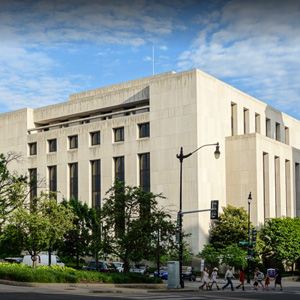
On May 7 more than 150 people attended the D.C. Bar CLE Program's Employment Law Conference, held at the Bar's headquarters. The event began with a comprehensive overview of significant developments over the past year and a half, particularly court decisions. Panelists highlighted key doctrinal shifts, emerging trends, and unresolved questions shaping the current landscape of employment law in the United States.
The next session examined the timeline of federal challenges to DEI programs and the impacts on the government, law firms, corporations, higher education, and bar associations. The panelists explored recalibration, rather than retreat, looking at what does — and doesn't — count as "illegal" DEI, and examining what is still possible for making progress on inclusion.
Perez Gives Keynote Speech
Tom Perez, a partner at Mayer Brown LLP and former assistant attorney general for the Civil Rights Division of the U.S. Department of Justice (DOJ), gave an impassioned yet sobering keynote address about how the federal workplace has changed under the current administration.
Perez talked about the drastic federal workforce reduction, recalling that when he served as secretary of the U.S. Department of Labor between 2013 and 2017, there were "about 750 lawyer personnel. I believe there are 30 right now," he said. When Perez left DOJ's Civil Rights Division in 2013, it had approximately 400 lawyers, he said. Since January 2025, more than 75 percent of the division's lawyers have left.
"Navigating today's legal landscape is unlike anything that I've seen in my lifetime," said Perez, "and I don't say that for dramatic effect." Before recent years, "administrations changed, but the dedicated career staff — the spine of every division and department in this country and the anchor in our nation's democracy — persisted throughout."
Perez talked about Title VII of the Civil Rights Act of 1964, which prohibits employment discrimination based on race, color, religion, gender, sexual orientation, and national origin. "Our laws and norms are designed to make sure that … the color of your skin is not going to be relevant, or your gender, sexual orientation, or gender identity," Perez said. He mentioned a May 19, 2025, DOJ memo announcing the "Civil Rights Fraud Initiative" to vigorously enforce the False Claims Act against federal funding recipients that violate civil rights laws through DEI efforts.
Perez argued that many companies with DEI initiatives are wondering if they want to challenge the memo or risk losing federal contracts. "It's a real challenge," he said. "Whether you are advising … an employer or an institution of higher education, these questions are not easy."
Nonetheless, Perez remained cautiously optimistic, arguing that lawyers who are trying to uphold the rule of law still have tools to fight for their clients. He also mentioned that some companies and law firms have fought back and won.
"The law does not require discrimination in the name of anti-discrimination," Perez said. "I remind clients of that with regularity. Our role … is to help our clients minimize their risk. And a lot of that risk is reputational because they want to continue to enjoy the respect of their workforce, and they understand that diversity is indispensable."
Panel Discusses Federal Employee Claims
Later that afternoon, James Eisenmann, a partner at Alden Law Group, PLLC, led the panel discussion "Federal Employees Under Siege." He was joined by John Koerner, assistant general counsel for labor and employment law at the U.S. Department of Homeland Security, and Michael Ceja Martinez, managing counsel of Civil Service Strong at Democracy Forward. The trio reiterated many of the salient points regarding the changing tides in the federal government that Perez touched upon during his keynote address.
"The federal government has lost a lot of employees over the past year," Eisenmann said. "About 335,000 career civil servants left the government in 2025. That's a loss of 4 million years of service." Of those, 154,000 federal workers left under the deferred resignation program. Because of this mass exodus, he argued that the quality of federal services has suffered.
Eisenmann discussed the Civil Service Reform Act, which "prohibits the taking of personnel actions to discriminate against a [f]ederal employee on the basis of race, color, religion, sex, or national origin, age, handicapping conditions, marital status, or political affiliation." It also prohibits "taking or influencing personnel actions for political or other nonmerit reasons and nepotism." The U.S. Office of Special Counsel (OSC) and the U.S. Merit Systems Protection Board (MSPB) handle complaints about unjust firing, but Eisenmann said that claims are not being channeled to OSC or MSPB. Former employees have attempted to bring those claims to federal court.
"Since January 2025, this administration has summarily fired … federal attorneys, prosecutors, and senior executives, while also defending lawsuits against Title VII by saying that Article II [of the U.S. Constitution] essentially preempts Title VII," he said.
"Most of the heads of the federal agencies or independent agencies have some 'for cause' protections," Eisenmann continued. "These principal officers are nominated by the president [and] confirmed by the Senate. And the statutes that agencies previously provided were specific that they can only be fired by the president … for certain reasons, in particular, neglect duty or inefficiency. The Trump administration has largely ignored those statutory protections for these principal officers."
As examples, Eisenmann mentioned the firing of former MSPB Chair Cathy Harris and Rebecca Slaughter of the Federal Trade Commission, as well as numerous immigration judges.
Harris and others have brought lawsuits to block their removal. "The judges rightly said, 'Look, these employees were entitled to due process' … and [ordered] that they [be] reinstated." The judges did not consider the Department of Justice's Article II argument as valid for the firings, he added. In March 2026, MSPB ruled that "immigration judges are inferior officers under Article II of the Constitution," and therefore could be fired at will, Eisenmann reported.
Martinez continued the discussion by explaining reductions-in-force (RIFs), which the federal government uses when positions are abolished because of lack of work, a shortage of funds, or other managerial needs. RIFs are supposed to be position based as opposed to person based, and RIF procedures are largely regulatory, not statutory.
He said that in February 2025, his former agency, the U.S. Office of Personnel Management, directed federal agencies to eliminate DEI offices and positions. "It was a clear violation of the RIF procedures," Martinez said.
Martinez reported that appeals of those firings have gone before MSPB. "Pretty soon, you will not have the ability to go to MSPB," he said. "At MSPB, early on, there was a sense that class certification would be the strategy. It really involves employees and certain agencies or offices that were all targeted in the same way at the same time. What we learned quickly is that the administrative judges said, 'No, typicality and commonality are not close enough to class. You have to look at retention factors and ratings and all this stuff, which you would do in normal RIFs.' It just wasn't happening in these contexts. So unfortunately, class certification as a strategy did not work, but there was a lot of consolidation of claims, and that has been a good strategy."
Kerner also spoke about litigation involving DEI in the federal government, emphasizing that he was speaking on his personal behalf. "I think the issue of DEI is representative of a broader trend that sometimes gets lost in the spectacle of people running around stages with chainsaws and what have you," Kerner said. "The ideas of diversity and equity are not new concepts. They've been part of the Civil Service Reform Act in some form for almost 50 years now."
Kerner reported that there is litigation in the federal courts, MSPB, and U.S. Equal Employment Opportunity Commission regarding the Trump administration's executive orders addressing DEI. The litigation involves elimination of positions identified as DEI-related through RIFs, the placement of employees on administrative leave without pay, and the termination of grants and restrictions on contractor activities. "These pose some interesting legal issues that will have to play out," Kerner said. "One issue that we're seeing brought up is whether employees who advocate for a particular position on civil rights issues have a First Amendment protection from being terminated due to their actual perceived beliefs. There are also questions of disparate impact. The administration has staked out a position that disparate impact is not a viable legal theory. So, I think there will be interesting developments in these areas that may have implications in both the public and private sectors."
The conference concluded with a session on representing multiple parties in employment matters. Topics included conflicts and professional responsibility issues that arise when an attorney represents organizations and individual executives or multiple employees with overlapping but distinct interests. Through legal updates, case studies, and audience-driven hypotheticals, the panelists explored how applicable rules of professional conduct apply in real-world scenarios.